

Jacques Ramphal
I'm a designer working where design, code, and AI meet.
Featured
When making something is nearly free, the scarce skill becomes knowing what’s worth building and being able to say why. A fifteen-year arc from graphic design to agent experience, which turned out to be the same story as vibe coding.
An audit came back sure of itself, every number in it was correct, and its first recommendation was backwards. Three times I lost the reasoning behind a handoff, and none of them were caused by AI.
I’ve fallen into months-long traps over kerning and button states. The tell was swapping between ideas. The details still matter. Everything should be touched at least once.
I built something I still think is great, and it isn’t doing what I built it to do. I assumed changing the format would change the perception. Sometimes it’s flipped.
A quote I’ve reached for as long as I can remember, read next to the design spec. What passes, what lasts, and why my work is life written down that rhymes with design.
An AI flags the line before I send it, and I feel relief, then the part that stings. Almost twenty years of messages went out with nobody flagging anything. On the mindfulness pause that was already doing that job, and the rule I run so a second reader doesn’t quietly become a replacement.
Two years ago I guessed where design was going. Every guess has been answered.
A design-engineering stance: limitations are sequencing problems, not blockers.
A bad workman blames his tools—but sometimes the tool is the ceiling. On how Figma labels designers as picture-makers, why every visual builder trades one lock-in for another, and the build workflow that removes the handoff so the thing you design is the thing that ships.
A project falling apart, fifty-odd UI defects and no source of truth, and what staying in it taught me: friction only sharpens you when there’s something steady to work against.
AI makes design fast. Dangerously fast. On why code friction is the discipline the process needs, and how to build constraints that let you run.

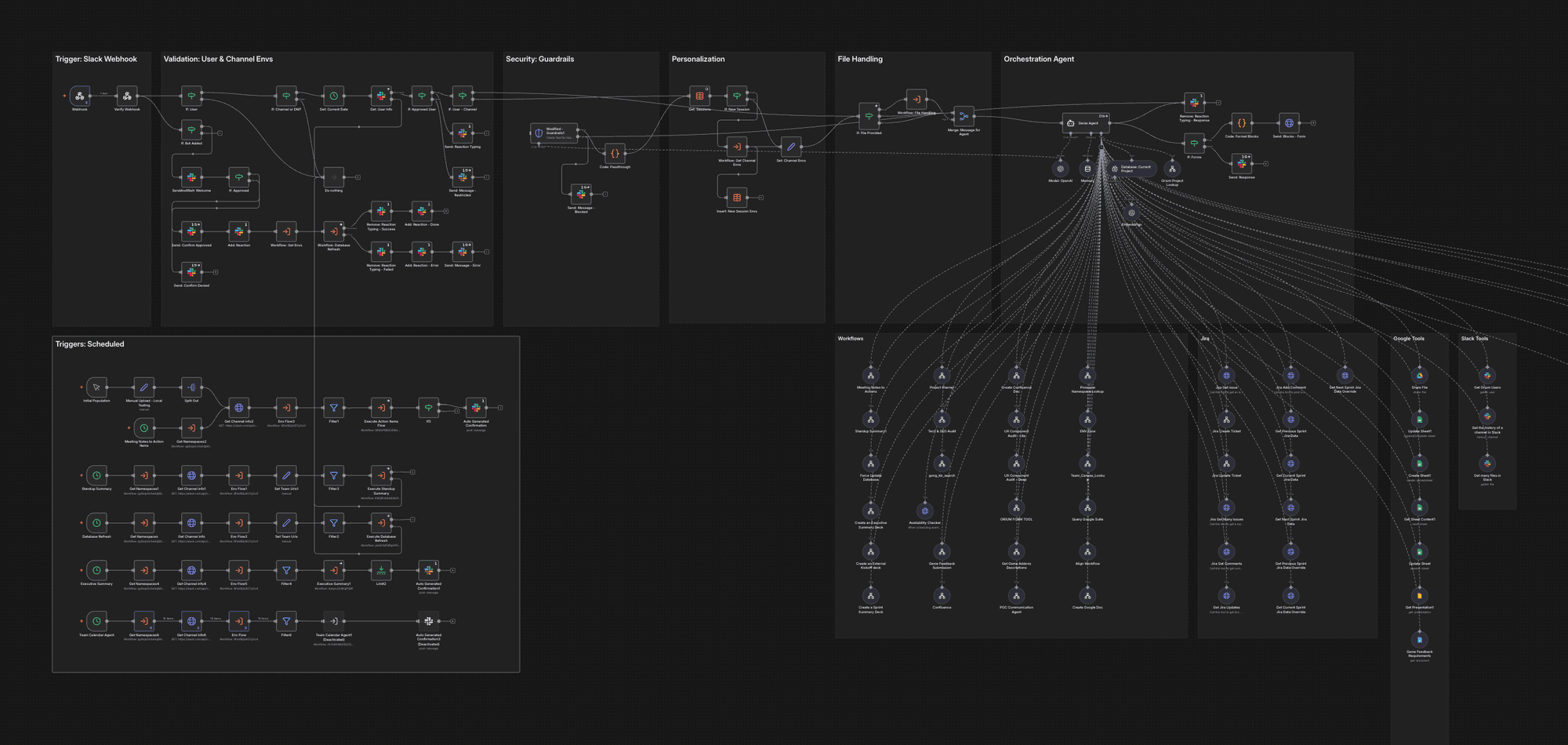
How Genie went from personal experiment to organizational platform, and what building it changed about how I work, what I’m capable of, and how others engage with me.
On the difference between the discomfort that makes you better and the kind that follows you home — and how to tell which one you’re feeding.
Finding joy in enterprise design when the craft has moved from pixels to systems, and why the human part of the work matters more as tools get better.
On showing up prepared without knowing the right answer, learning to sit with that discomfort, and being kind enough to yourself to build the support before you need it.
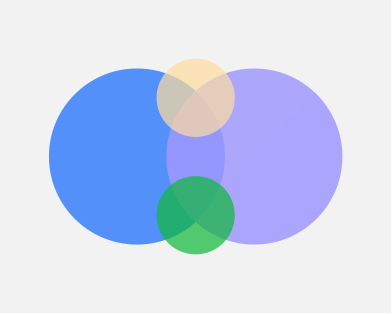
What designing for agentic systems looks like (mapping real workflows, defining agent behavior, setting guardrails), and why the skills designers already have are the ones that matter most.
How pressure, curiosity, and transferable skills created a career path no one handed me. On finding your niche, navigating identity shifts, and building relevance by staying grounded in what’s true about how you work.

Speculation on where design is heading, read as tensions rather than destinations: siloed to integrated, static to dynamic, proprietary to open-source.
The complementary role of human and machine intelligence. Automation is acceleration, not intelligence. The future of quality is machines for detection, humans for discernment.

When quality is built into the baseline from the start, QA shifts from discovery to confirmation, and the best QA process is the one that doesn’t have to happen.
A living collection of wisdom from opinionated mentors, teachers, and personal design observations. From foundational principles to leadership lessons, this is a journal of continuous learning in design, code, and craft.
On the principles beneath front-end tools: headless complexity, tech debt, and why interoperability should be the core of your design practice.

Why a shared design language is the most resilient investment teams can make while tools, roles, and workflows keep changing.

As agentic AI raises customer expectations for responsive, intelligent service, the gap between what companies promise and what they reliably deliver becomes their actual brand identity.

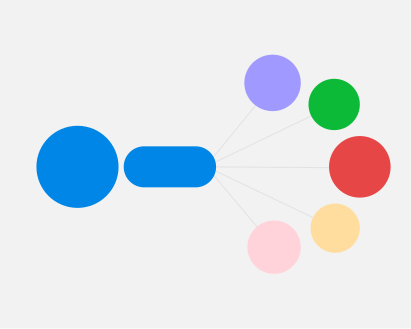
Designing agentic systems forces you to rethink how delivery work gets done: shifting requirements, scattered context, rising risk, and teams stretched thin. How we built Genie, an agentic orchestration layer that consolidates context, generates requirements, surfaces risks, and automates workflows, and the three mental model problems we solved in designing for agentic AI.