Kum & Go mobile loyalty app

A composable mobile app with loyalty, fuel pay, and promotions for a convenience retailer ready to own its digital experience.
| Role | Lead Product Designer · Developer |
| Client | Kum & Go / Orium |
| Status | Launched · 2022 |
| Tags | product-design · mobile · loyalty |
Key learning
Designing for the pump means designing for a constrained moment. Every extra tap costs more when someone is standing outside in bad weather with a car that needs fuel.
Overview
Kum & Go wanted to own their digital experience, not just run it.
That meant moving off a legacy platform onto something their team could manage, extend, and evolve without routing every change through an external partner. The existing app was limited with promotions, couldn’t surface personalized offers, and didn’t connect the in-store experience to the mobile one in any meaningful way. The goal was to rebuild it on a composable foundation and launch a loyalty program that could anchor a longer-term relationship with their customers.
The constraint
The app needed to feel like a genuine loyalty platform, not a points counter bolted onto a fuel app, and it needed to launch without disrupting a service customers already relied on.
Kum & Go’s customers use the app at the pump, often quickly, often in bad weather. Every additional step in a flow has a real cost. The loyalty program had to reward behavior customers were already doing without requiring them to learn a new mental model. And the architecture needed to be extensible enough that Kum & Go could add features independently after launch.
Approach
Loyalty built around existing behavior
The loyalty program had to reward what customers were already doing: fueling up, visiting the store, making the usual purchases. The personalized feed surfaced offers based on purchase history. Home location selection made the app feel contextually aware. The goal was for the experience to feel like it was paying attention, not like a points counter customers had to manage.
Closing the digital-physical loop
Mobile Fuel Pay let customers prepay for gas and redeem points at the pump without leaving the app. That connection between the app and the physical store is where most retail loyalty programs break down. They work in the app or they work in store, but rarely both in the same moment. Closing that loop was the most significant functional decision in the project.
A platform Kum & Go could own
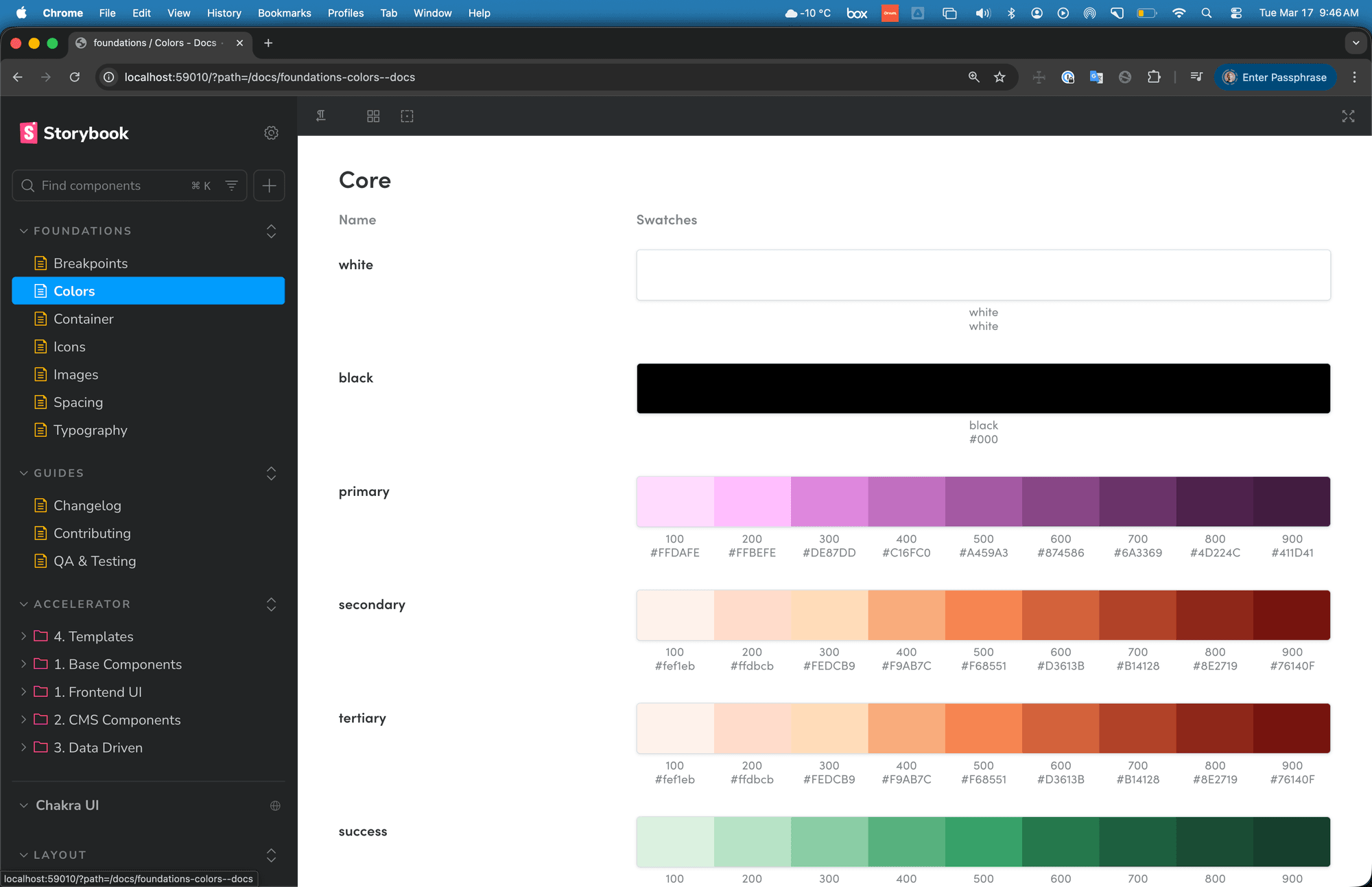
Contentful handled content management so Kum & Go’s marketing team could update promotions independently. The app was built on React Native using Orium’s accelerator, with Paytronix managing the loyalty backend and Typesense handling search. The composability of the stack was deliberate. Kum & Go needed to be able to extend and operate it without routing every change through an external team.
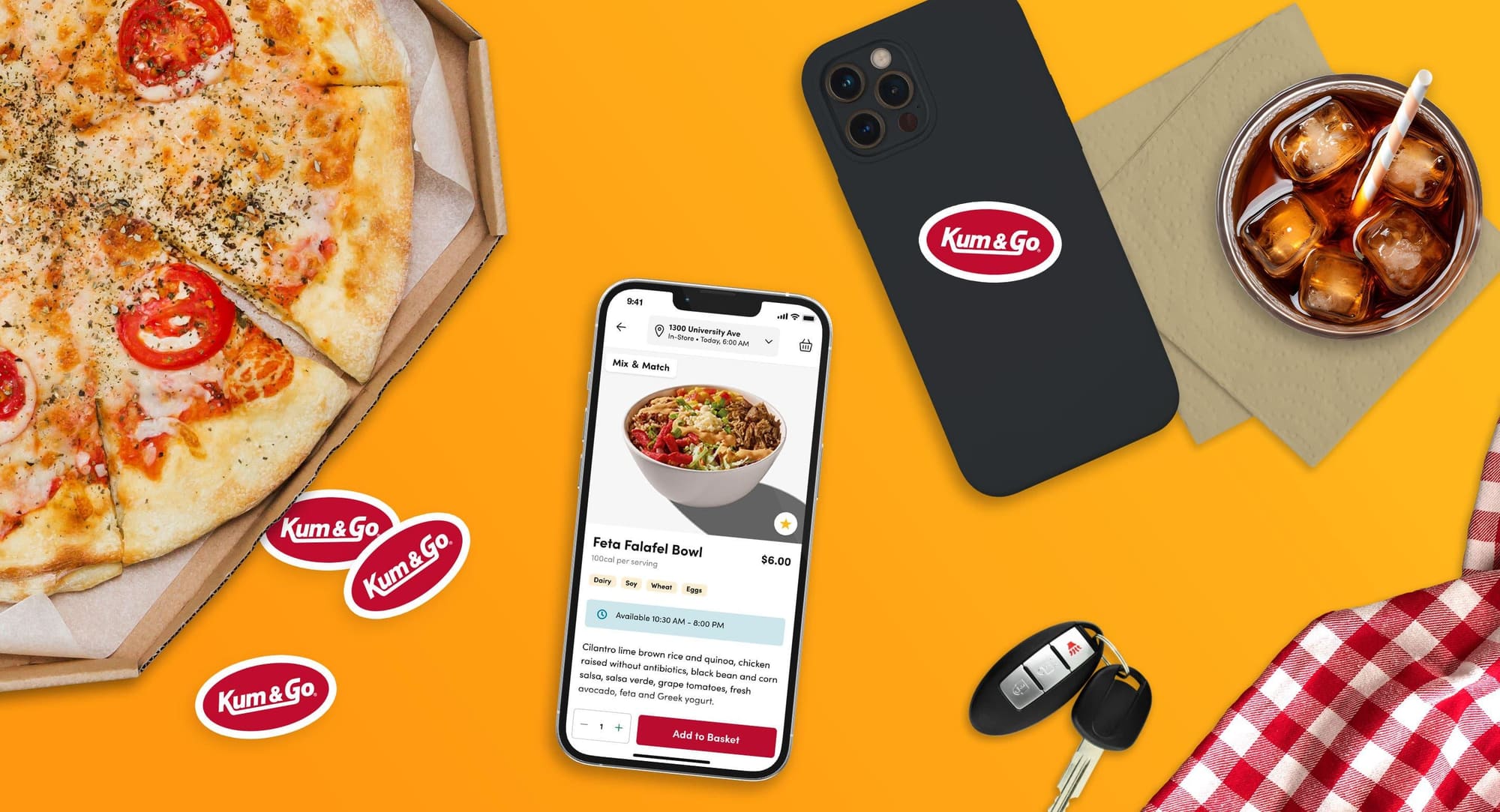
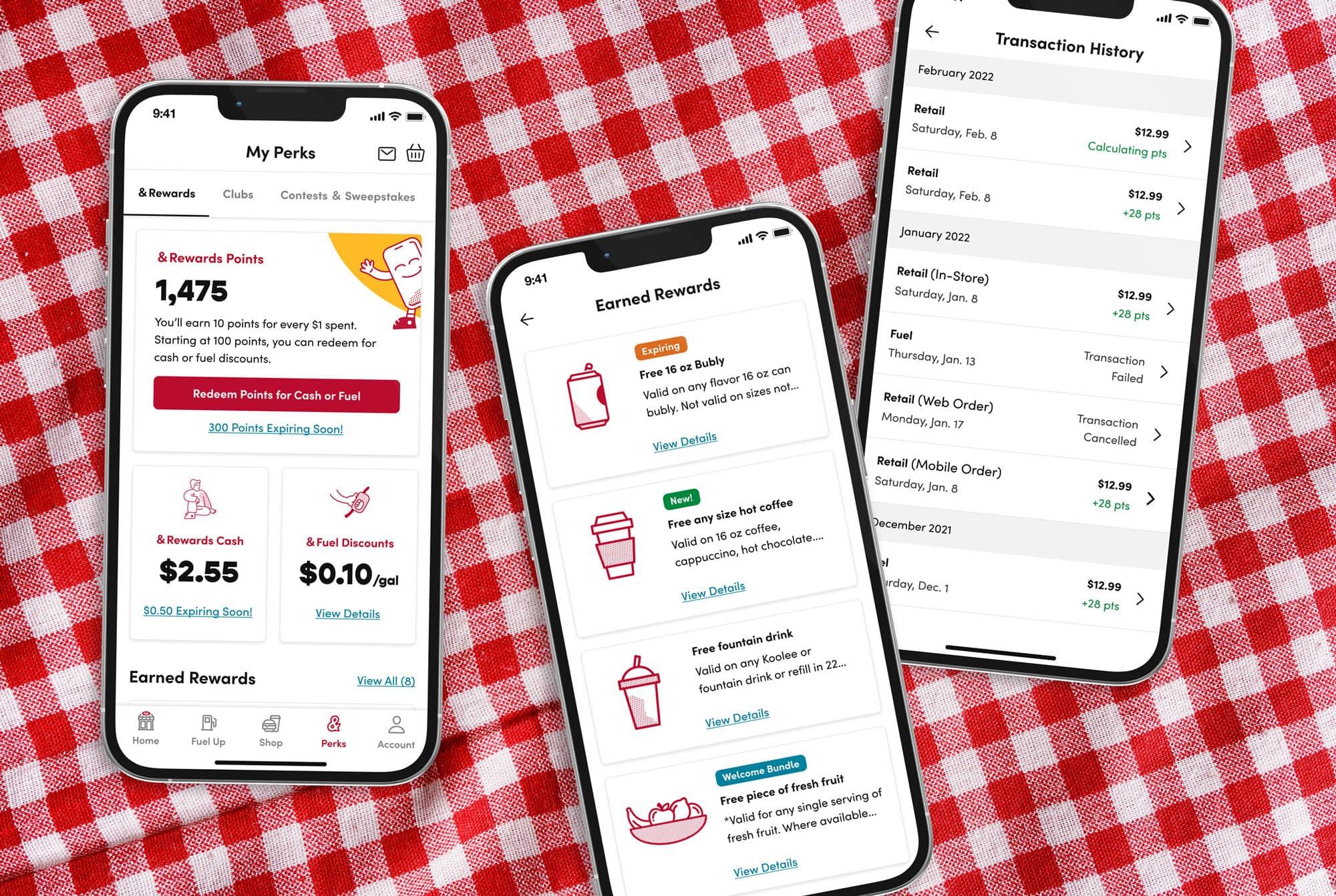 Mobile Fuel Pay and loyalty program integration, the core of the in-store digital experience.
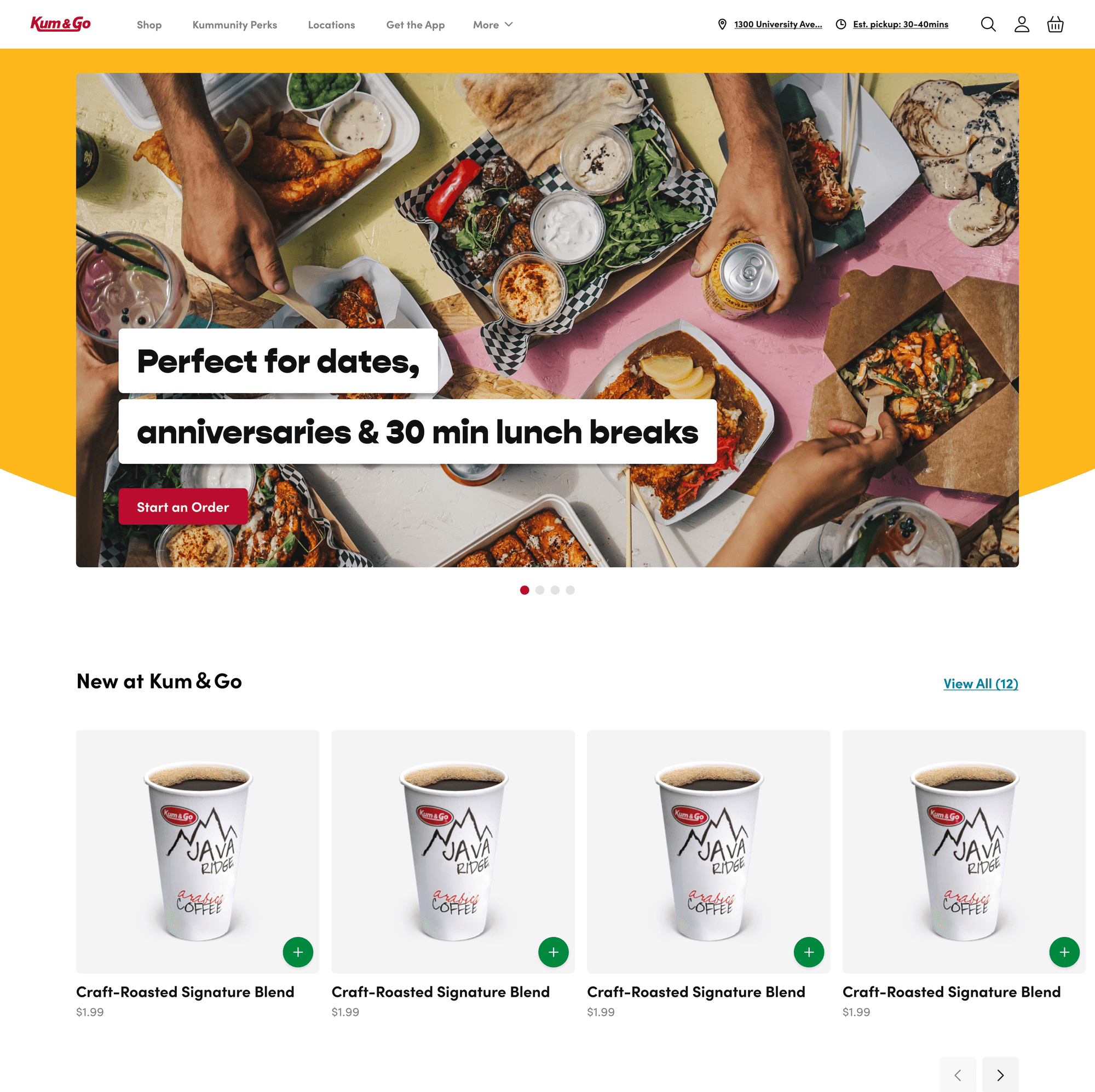 The full loyalty app: personalized feed, rewards dashboard, and pump-side redemption.
Outcome
The app launched with the loyalty program, Mobile Fuel Pay, and a personalized experience Kum & Go’s team could manage and extend on their own.
Rewards enrollment, personalized offers, and pump-side redemption were all live at launch. Kum & Go moved off the legacy platform without service disruption and came out with a codebase they owned.
Launched app with upgraded rewards program and enhanced ecommerce capabilities.
What I learned
Designing for the pump means designing for a constrained moment: a customer outside, possibly cold, with a car that needs fuel. Every extra tap matters.
What I came away with is a stronger instinct for flow economy in transactional contexts: fewer decisions, faster paths, feedback that confirms without demanding attention. The design decisions that matter most are the ones that respect the user’s time at the point of transaction.